
English Version
New therapy against pancreatic cancer: nanotechnologies employing ultrasound
Discover groundbreaking research on nanomedicine’s potential in treating pancreatic cancer with ultrasound.
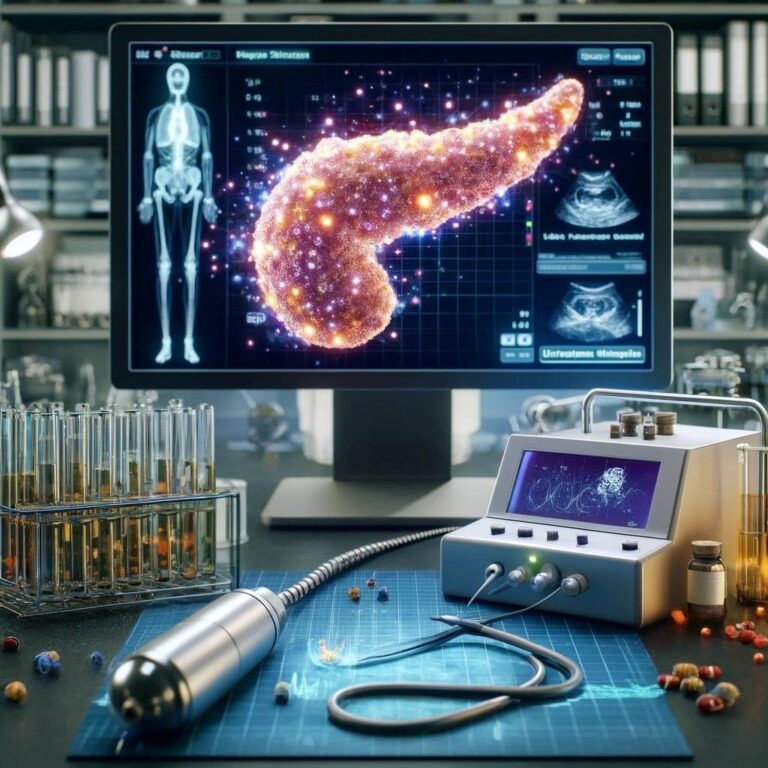
Innovative medical research exploiting Nanotechnologies emerges as a highly effective therapeutic perspective with limited side effects.
With the aim of exploring this interesting topic, I turn to Professor Valentina Cauda, a professor at the Polytechnic of Turin, a key figure internationally known for her work in such field.
Dear Professor Cauda, your studies involve the use of ultrasound to activate anti-tumor nanoparticles specifically targeting an organ or tissue affected by neoplasia, thus sparing the remaining healthy parts of the organ and the whole organism. Could you elaborate on your current work?
“Pancreatic adenoductal carcinoma is one of the most aggressive tumors today, destined to become the second leading cause of cancer death in the United States by 2030 and the fourth in Europe. During the earliest stages of the disease, symptoms are extremely variable and often associated with less severe conditions, making diagnosis challenging until advanced and non-operable stages.
Currently, conventional therapies mainly consist of surgery, limited to patients with relatively early diagnosis and absence of metastasis, chemotherapy, radiotherapy, ablative treatments, and immunotherapy. These therapies are accompanied by severe side effects, and in presence of metastasis or disease recurrence, palliative care is the only option to try to improve patients’ quality of life.
In recent decades nanomedicine, defined as the application of nanotechnologies in the medical field, has enabled the introduction of new innovative treatments aimed at overcoming the limitations of more conventional approaches. In the context of pancreatic adenoductal carcinoma, notorious for its drug resistance and enormous variability of cell types in the tumor microenvironment, innovative therapies “smartly” designed to selectively target only diseased tissues would greatly improve patient conditions, from early diagnosis to personalized therapy.
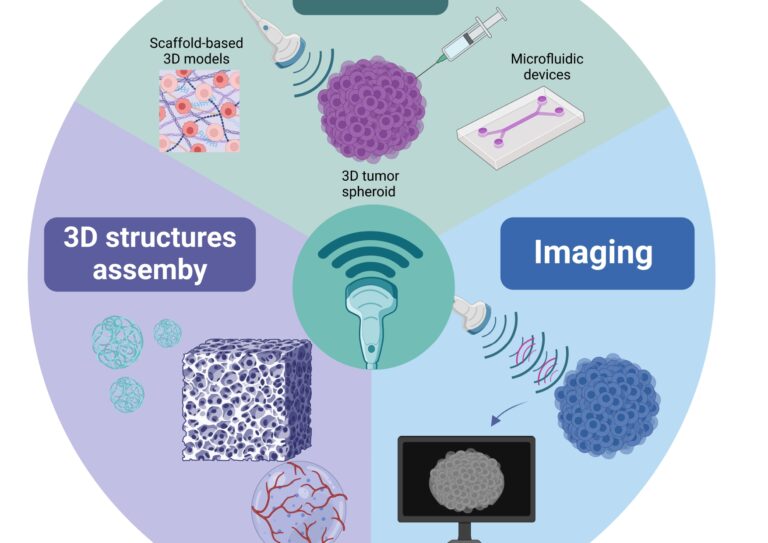
Given the depth of the pancreas in the abdominal cavity, approaches involving the application of an external stimulus capable of penetrating to the tissue of interest have gradually sparked the interest of the scientific community. An example is sonodynamic therapy, which involves the application of ultrasonic stimulation capable of generating pressure waves in tissues.
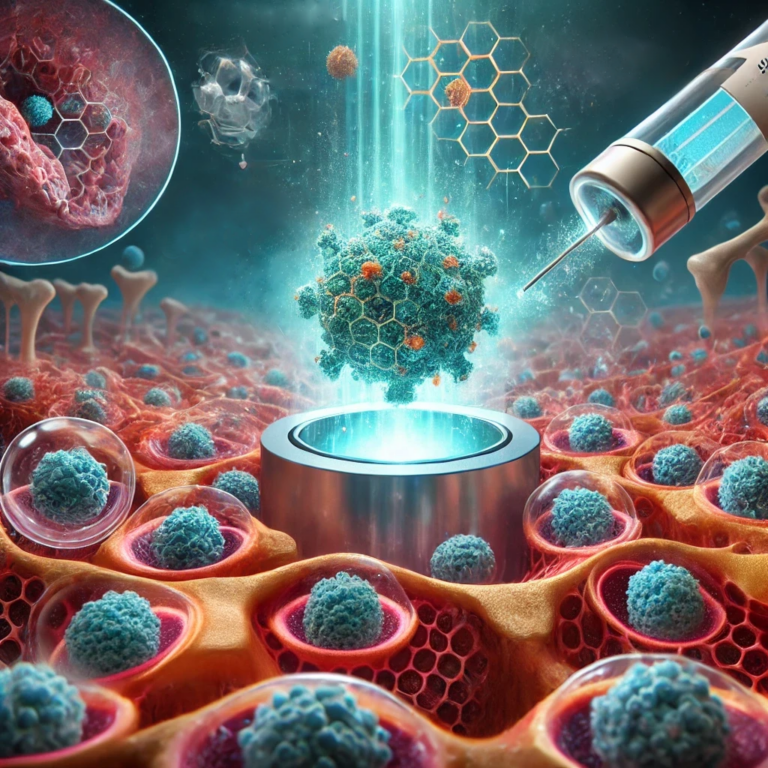
One consequence of this stimulus is acoustic cavitation, the creation of air microbubbles which, due to the oscillations imparted by the stimulus, expand and contract leading to the formation of free radicals causing the creation of high temperatures and local pressures. The main effects of such explosions are the generation of oxygen free radicals, light generation, and the initiation of chemical reactions. An increase in free radicals beyond the physiological level causes oxidative stress to cells, leading to a programmed cell death process called apoptosis.
If properly directed, this therapy could therefore cause the death of tumor cells without affecting the surrounding healthy tissues.”
One of the approaches currently developed by Professor Valentina Cauda’s research group is that of Eng. Marzia Conte, a PhD student in Chemical Engineering: “In our research, we aim to combine ultrasonic stimulation with systemic administration of biomimetic nanoparticles. Designed by our group with a tailored formulation, they are capable of being transported through the bloodstream to the tissues of interest and can increase the production of free radicals in the target tumor mass, particularly in the pancreas. The hope is to improve current therapeutic approaches and slow down the progression of this disease. Science is moving at a breathtaking pace to bring to market, after appropriate preclinical tests and subsequent in vivo trials, new cutting-edge therapies aimed at hopefully improving the lives of patients affected by such tumors.”
For more information on the topic, visit the website https://tnhlab.polito.it/
Bibliography
- Conte, V. Cauda, Multimodal Therapies against Pancreatic Ductal Adenocarcinoma: A Review on Synergistic Approaches toward Ultimate Nanomedicine Treatments. Adv. Therap. 2022, 5, 2200079.
- Rawla, T. Sunkara, V. Gaduputi, World J Oncol 2019, 10, 10.
- Belalcazar, G. P. Nagaraju, in Theranostic Approach for Pancreatic Cancer, Elsevier, 2019, pp. 69–80.
- Dumontel, F. Susa, T. Limongi, M. Canta, L. Racca, A. Chiodoni, N. Garino, G. Chiabotto, M. L. Centomo, Y. Pignochino, V. Cauda, Nanomedicine 2019, 14, 2815.
- Vighetto, A. Ancona, L. Racca, T. Limongi, A. Troia, G. Canavese, V. Cauda, Frontiers in Bioengineering and Biotechnology 2019, 7.
- Carofiglio, M.; Laurenti, M.; Vighetto, V.; Racca, L.; Barui, S.; Garino, N.; Gerbaldo, R.; Laviano, F.; Cauda, V. Iron-Doped ZnO Nanoparticles as Multifunctional Nanoplatforms for Theranostics. Nanomaterials 2021, 11, 2628
- Conte, M.; Carofiglio, M.; Rosso, G.; Cauda, V. Lipidic Formulations Inspired by COVID Vaccines as Smart Coatings to Enhance Nanoparticle-Based Cancer Therapy. Nanomaterials 2023, 13, 2250. https://doi.org/10.3390/ nano13152250